Blog / Electric Vehicle

Blog

All Electric Vehicle Buying Guides Trucks Silverado 3500HD Silverado 1500 SUV BOLT EV Silverado 2500HD BOLT EUV Silverado EV Suburban Equinox Cars Tahoe Blazer EV Colorado Traverse Blazer Cab Chassis Bed Brands Trailblazer Equinox EV Malibu Trax Camaro CM Beds Owner Experiences Donohoo Chevrolet Service Spark Royal Truck Beds Black Widow / Rocky Ridge Reading
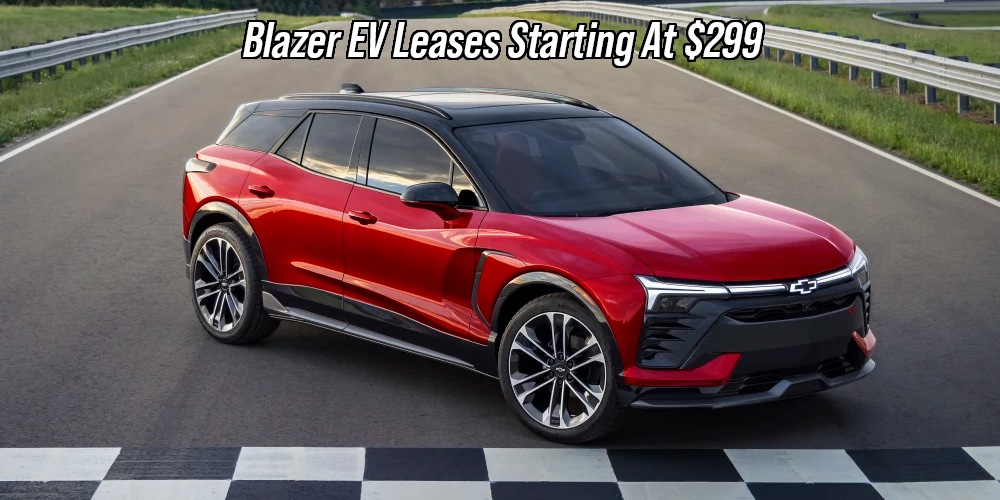
Blazer EV Leases

Exceptional Lease Offers at Donohoo Chevrolet: Drive Your Dream Chevy Today!

If you're in the market for an exciting new vehicle, Donohoo Chevrolet has some incredible lease offers that make driving a new Chevy both affordable and easy. With their wide selection of models, competitive pricing, and flexible lease terms, there's never been a better time to get behind the wheel of a Chevrolet. Let’s dive into some of the best lease deals currently available. 1. 2024 Chevrolet Blazer EV 1RS The 2024 Blazer EV 1RS is a stylish, electric SUV designed for those who want the perfect blend of performance and eco-friendliness. With a 24-month GMF lease, you can enjoy this cutting-edge SUV for only $349 per month. The Blazer EV 1RS is packed with advanced technology, sleek design, and the all-electric performance that’s perfect for today’s driving needs. 2. 2024 Chevrolet Blazer EV 2RS For those seeking a bit more power and style, the Blazer EV 2RS offers a step up in performance. This model is available on a 24-month GMF lease at $399 per month. The 2RS brings additional upgrades in terms of features, while still delivering the quiet, all-electric drive that is synonymous with Chevy’s EV line. 3. 2024 Chevrolet Blazer EV AWD 2LT Looking for both all-wheel drive and affordability? The Blazer EV AWD 2LT comes in with a fantastic offer. Available on a 24-month GMF lease at just $299 per month, this deal gives you all the capability of an AWD vehicle at a budget-friendly price. The 2LT trim offers comfort, technology, and efficiency, all wrapped into one attractive package. Why Lease from Donohoo Chevrolet? At Donohoo Chevrolet, their commitment to customer satisfaction goes beyond offering great cars. Here’s why you should consider leasing from them: Flexible Lease Terms: With convenient 24-month terms, you’re not tied into a long-term commitment, allowing you to upgrade to a new model more frequently. Competitive Pricing: Their lease offers are designed to fit various budgets, making it easier to drive home the vehicle of your choice without breaking the bank. Cutting-Edge Models: From all-electric options to feature-packed trims, Donohoo Chevrolet has the latest and greatest models in stock, ensuring you drive the best Chevy has to offer. Ready to Take the Next Step? With these outstanding lease deals, Donohoo Chevrolet is making it easier than ever to drive home in a new Chevy. Whether you’re drawn to the efficiency of an electric vehicle, the performance of an RS trim, or the practicality of all-wheel drive, Donohoo Chevrolet has the right lease offer for you. Visit Donohoo Chevrolet today to take advantage of these limited-time offers and experience the thrill of driving a brand-new Chevy!

EVheader

Navigating the Shift to Electric: Challenges and Opportunities for Automakers

The automotive world is undergoing a significant transformation, and automakers find themselves at a crucial juncture. The initial rush to embrace electric vehicles (EVs), driven largely by passionate early adopters, is now reaching a pivotal point. As the focus shifts towards the "early majority"—a more price-sensitive group—the challenges are becoming more pronounced. Axios highlights that these mainstream consumers are not easily swayed. Their hesitations arise from concerns about the higher costs of EVs compared to traditional gasoline vehicles, uncertainties surrounding the charging infrastructure, and a belief that more advanced models are on the horizon. The overarching sentiment seems to be: why invest in today's EVs when tomorrow's might be superior? more This consumer sentiment suggests that the trajectory towards a predominantly electric future might not be as swift or smooth as once anticipated. Reacting to these evolving dynamics, many automakers are recalibrating their strategies. They're revisiting pricing models and production targets, but their commitment to an electric future remains unwavering. Diving deeper, GM exemplifies the challenges of this transition. If a GM electric vehicle is on your radar, it's essential to understand the current landscape. A recent Reuters report revealed some production challenges faced by the automotive giant. GM's Chief Financial Officer, Paul Jacobson, addressed these during a J.P. Morgan investor conference. He highlighted battery module assembly as a key challenge, likely stemming from supplier-related issues, a sentiment echoed by CEO Mary Barra. The real-world impact of these challenges is evident in the Cadillac Lyriq's production. GM's ambitious projection in 2022 to produce 25,000 Lyriqs at their Spring Hill, Tennessee plant fell short. In the first half of this year, less than 2,400 units reached customers, primarily due to battery-related issues. Yet, with challenges come opportunities. The anticipation surrounding GM's upcoming EVs, like the Chevy Blazer EV, is palpable. As Chevrolet enthusiasts, we at Donohoo Chevrolet eagerly await these models and remain optimistic about what the future holds. To sum it up, the transition to a fully electric automotive landscape is not without its challenges. But as the industry evolves, one thing remains certain: at Donohoo Chevrolet, our passion for innovation and our commitment to our customers will always drive us forward.

BlazerEVHeader

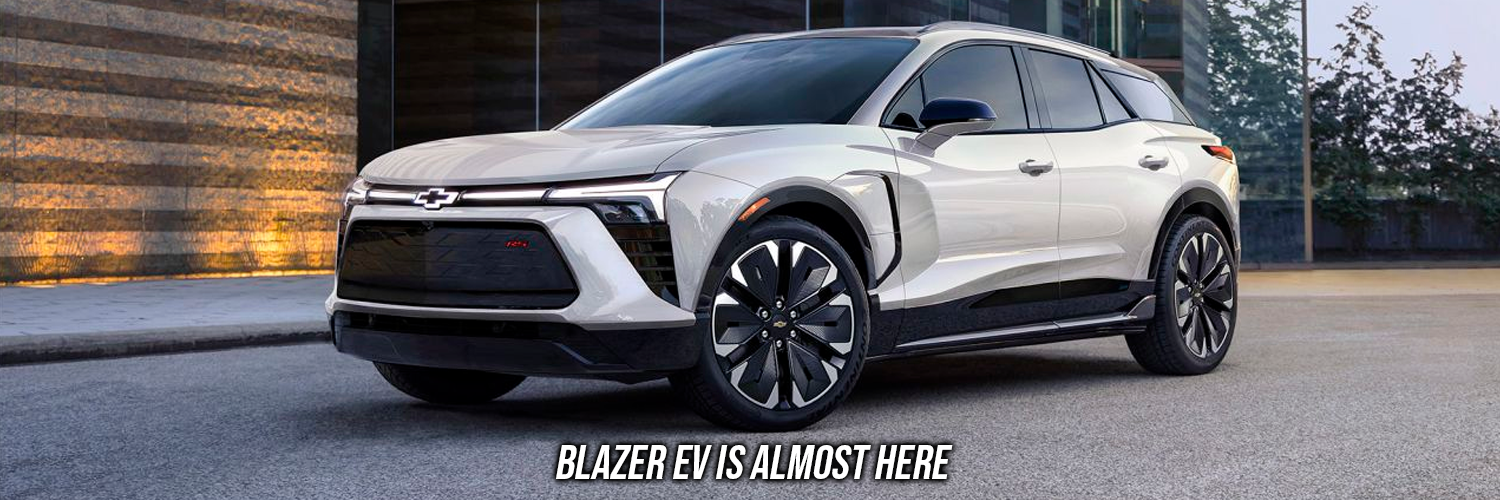
The Blazer EV is Almost Here

The Chevrolet Blazer is back, and this time as an all-electric SUV for 2024. Chevy's move into the electric realm is impressive, and the Blazer EV is a model that will leave drivers impressed. The Blazer EV is an all-new model within the Blazer family and comes with its own distinct body and interior. The vehicle will be offered in four different trims, including the 1LT, 2LT, RS, and SS. The mid-range 2LT and RS models will be the first to hit the market in summer 2023, while the top-spec SS trim will follow shortly thereafter, going on sale before the end of 2023. The 1LT trim will join the lineup in early 2024. Chevrolet hasn't released horsepower figures for the 1LT, 2LT, or RS models yet, but the range-topping SS model will come exclusively with a 557-hp electric powertrain with standard all-wheel drive. The 1LT is available only in a front-wheel drive arrangement, while 2LT models can be had with either front- or all-wheel drive. The RS model comes standard with either front- or rear-wheel drive, with all-wheel drive optional. more Technology Packed One of the most impressive features of the Blazer EV is its battery technology. The Blazer EV uses General Motors’ Ultium battery technology, which is a significant advancement in battery technology. The RS trim has the most range and is said to go about 320 miles on a charge. The entry-level 1LT model will deliver around 247 miles per charge, while the 2LT and SS trims offer a claimed range of 293 and 290 miles, respectively. The Blazer EV will be capable of charging on a DC fast charger, and Chevrolet says it can charge at up to 190 kW and add about 78 miles of range in just 10 minutes. The Blazer EV is strictly a two-row affair, with a sporty interior-design motif that nicely matches the SUV’s aggressive exterior styling. The RS and SS trims feature a two-tone black-and-red color scheme, while a more monotone look is available for those who don’t appreciate the flash. All models come with a large 17.7-inch infotainment display that’s canted slightly toward the driver and framed on the left and the bottom by physical controls for the climate control system and a volume knob. A secondary 11.0-inch display presents the driver with gauges and other driving info. We expect to see plenty of standard connectivity features such as Apple CarPlay, Android Auto, and an onboard Wi-Fi hotspot. Super Cruise and Driver Assistance Features Chevrolet is bundling a host of driver assistance features together as standard, including automated emergency braking, lane-keeping assist, and a parking assist feature. GM’s Super Cruise hands-free driving system is also available. Chevrolet provides standard coverage limits for the Blazer EV’s electric-powertrain components, which includes the first maintenance visit. The Blazer EV is an impressive all-electric SUV from Chevrolet, and it is clear that the automaker is serious about its move into the electric car market. With impressive range, advanced battery technology, and a host of standard safety and driver assistance features, the Blazer EV is a solid choice for those looking for an electric SUV. Blazer EV

BOLTEVHEader

BOLT EV Qualifies for the Used Tax Credit

If you're considering purchasing an electric vehicle (EV) in 2023, it might be worth looking into a used one to take advantage of the revamped federal tax credit up to $4,000. In this blog post, we'll go over what we know about how the Bolt EV qualifies for the used EV tax credit. The $7,500 federal tax credit has been extended for new EV purchases under revised qualifying terms, but those current requirements leave a very limited number of current EVs that qualify. Many automakers are already pivoting their business strategies to move EV and battery assembly to US soil to once again qualify, but it will take time to establish those facilities and get them up and running. In a perfect world for consumers, any and all used EV purchases would qualify for tax credits from the US government, but that's unfortunately not the case. As part of revised terms in the Inflation Reduction Act signed by President Biden, federal tax credits have been extended and include revamped benefits for used EV purchases, as long as they fit certain criteria. more To qualify as a customer, you must: Be an individual who bought the vehicle for use and not for resale Must be an individual (no businesses) Not be the original owner Not be claimed as a dependent on another person's tax return Not have claimed another used clean vehicle credit in the 3 years before the EV purchase date Modified adjusted gross income must not exceed $75k for individuals, $112,500 for heads of households, and $150k for joint returns Additionally, in order for a used EV to qualify for federal tax credits, it must: Have a sale price of $25,000 or less Have a model year at least 2 years earlier than the calendar year when you buy it Not have already been transferred after August 16, 2022, to a qualified buyer Have a gross vehicle weight rating of fewer than 14,000 pounds Be an eligible fuel cell vehicle (FCV) or plug-in EV with a battery capacity of least 7-kilowatt hours (kWh) Be for use primarily in the United States Purchased from a certified dealer A used vehicle qualifies for tax credit only once in its lifetime The Bolt EV from Chevrolet (GM) is an all-electric model that currently qualifies for the full $4,000 tax credit. As always, we recommend speaking with a tax professional and EV dealer directly to ensure what you and your new vehicle qualify for. Make/Model/Year(s) Full Tax Credit CHEVROLET (GM) Bolt EV (2017-2021) $4,000 Spark EV (2014-2016) $4,000 Whether it's a new or used EV purchase that ends up being right for you, you may still be able to take advantage of additional perks at the state level, depending on where you live. Credits, exemptions, and other benefits could be available for an EV purchase, lease, or relevant equipment like home charger installation. A used EV might be the way to go in 2023 to take advantage of the federal tax credit up to $4,000.  Make sure to do your own research and speak with a tax professional directly. Stay up to date on our 2017-2021 Bolts we have available for sale by clicking the link below. This will have all the 2017-2021 Bolts with a sales price up to $25,000. We can help with vehicle eligibility questions on these vehicles. You will need to cover your personal income questions with your tax professional to see about eligibility on that front. Shop Qualifying Bolts

ProsandCons

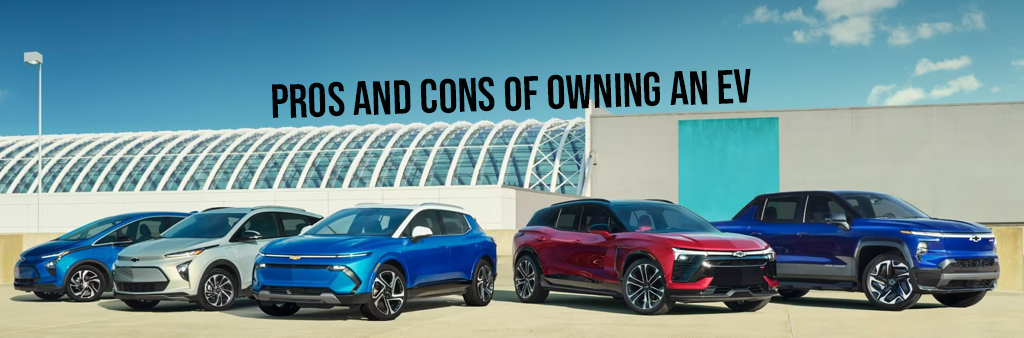
Pros and Cons of Owning an EV

As we become more aware of the impact of climate change, the transportation sector is quickly becoming a key area of focus for reducing greenhouse gas emissions. One option for reducing emissions is to switch from gasoline-powered vehicles to electric vehicles (EVs). While EVs have some clear advantages over gas-powered vehicles, there are also some challenges to consider when deciding whether to switch. more Pros of owning an electric vehicle: Environmentally friendly: The most obvious advantage of EVs is their environmentally friendly nature. EVs produce no tailpipe emissions and have a much lower carbon footprint than gasoline-powered vehicles. This means that driving an EV can help reduce air pollution and mitigate the impacts of climate change. Lower operating costs: EVs have lower operating costs than gas-powered vehicles. The cost of electricity is generally much lower than gasoline, and EVs require less maintenance since they have fewer moving parts. In the long run, owning an EV can be more cost-effective than owning a gas-powered vehicle. Energy independence: EVs can help reduce reliance on oil and foreign oil imports, providing greater energy independence and reducing the risk of oil price shocks. EV owners can charge their vehicles at home, meaning they have greater control over their energy supply. Smooth and quiet ride: EVs are much quieter and smoother than gasoline-powered vehicles because they have fewer moving parts. This makes for a more comfortable driving experience. Tax credits: Depending on where you live, you may be eligible for federal and state tax credits and incentives for purchasing an EV. These incentives can help offset the higher initial cost of purchasing an EV. Cons of owning an electric vehicle: Limited range: EVs typically have a shorter driving range than gasoline-powered vehicles, so they may not be suitable for long road trips. However, the range of EVs is improving rapidly, and many models now offer ranges that can accommodate most daily driving needs. High upfront costs: EVs are often more expensive than comparable gasoline-powered vehicles. However, as battery technology improves and production volumes increase, EV prices are expected to continue to decline. Charging infrastructure: Depending on where you live, charging infrastructure may be limited, making it difficult to charge your vehicle on the go. However, this is also improving rapidly, and many cities and states are investing in charging infrastructure to support the growing number of EVs on the road. Charging time: It takes longer to charge an EV than to fill up a gasoline-powered vehicle, so you'll need to plan ahead if you're going on a long trip. However, this is also improving rapidly, and many newer EV models offer fast-charging capabilities that can significantly reduce charging times. Battery life and replacement costs: The battery pack in an EV is expensive to replace, and the battery's lifespan may be shorter than the life of the vehicle itself. However, as battery technology improves, battery lifetimes are expected to increase, and the cost of replacement batteries is expected to decline. Owning an EV has both pros and cons. While EVs are more environmentally friendly, have lower operating costs, and offer a smooth and quiet ride, they also have some challenges, such as limited range, high upfront costs, and charging infrastructure. However, as technology improves and infrastructure expands, the advantages of owning an EV will become even more compelling, making the switch to an EV an attractive option for many drivers. As an EV owner, I can easily recommend an EV as a second vehicle in a two-vehicle family. They make getting around town an absolute joy and extremely cost-effective. For single-car families, or those living in an apartment without a place to charge, the EV movement may have to wait until the technology improves. Shop Our EVs

MayHeader

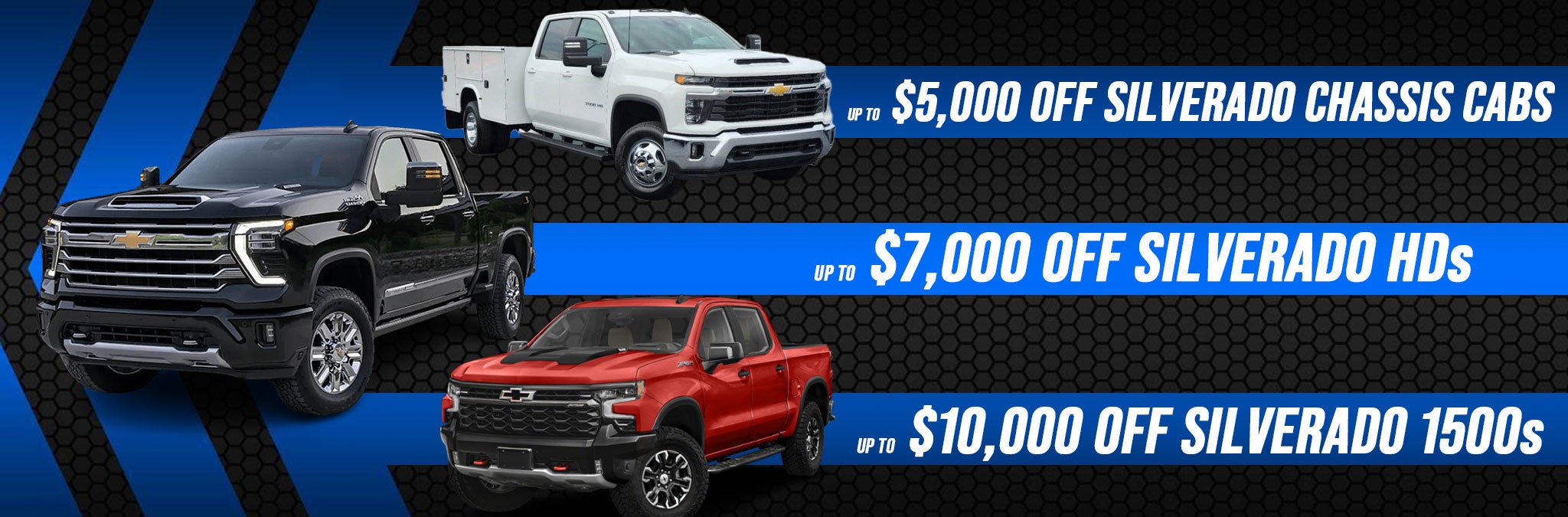
Donohoo Chevrolet's May Deals

Please be aware that our discounts change monthly, aligning with Chevrolet's incentives. To avoid missing out, secure your vehicle today to take advantage of our current special rates. For those considering "On Order" vehicles—these are lined up for production and lack set MSRPs. Opting for these can be a time-efficient alternative to custom orders. Why Choose Donohoo Chevrolet? Transparent pricing with no surprises. Zero dealer fees. Our team consists of non-commissioned salespeople, ensuring unbiased assistance. We don't adjust prices based on market fluctuations. The price you see is final. Silverado 1500 Offers Donohoo Chevrolet is currently hosting a remarkable sales event featuring the Silverado 1500, known for its robust V8 engines. Dive into our extensive selection to find exceptional deals. Take advantage of remarkable discounts, with up to $10,000 off plus $2,250 Trade Assist on certain models or an incredible $22,000 reduction on the exclusive Rocky Ridge editions. Plus, experience the added perk of no dealer fees. Don't miss this opportunity to own a standout Silverado 1500 at an unmatched value. There is a trade assist this month. This is a GM incentive and is a rebate that you can qualify for by trading in a 2010 or newer vehicle. It is not included in our advertised price, rather gets added to your discount if you have a trade. 2024 Silverado 1500 Custom Gas are $7500 off MSRP and have an additional $2250 trade assist LTZ Diesel and 6.2L Gas are $6000 off MSRP and have an additional $2250 trade assist LTZ 5.3L Gas are $10000 off MSRP and have an additional $2250 trade assist RST Gas are $10000 off MSRP and have an additional $1000 trade assist RST Black Widow are $12000 off MSRP and have an additional $1000 trade assist WT 5.3L Gas are $6000 off MSRP and have an additional $2250 trade assist Custom Trail Boss Diesel are $6000 off MSRP and have an additional $2250 trade assist Custom Trail Boss 5.3L Gas are $6000 off MSRP and have an additional $2250 trade assist LT Trail Boss Diesel are $6000 off MSRP and have an additional $2250 trade assist LT Trail Boss Gas are $6000 off MSRP and have an additional $2250 trade assist ZR2 Gas are $9000 off MSRP and have an additional $2250 trade assist High Country Diesel are $10000 off MSRP and have an additional $2250 trade assist High Country Gas are $10000 off MSRP and have an additional $2250 trade assist On Order Silverado 1500s Produced Silverado 1500s Lifted and Off-Road Trucks more Introducing the Redesigned 2024 Silverado HD and Chassis Cabs with Custom Bed Options Donohoo Chevrolet boasts one of the nation's premier selections of Silverado Heavy Duty trucks, offering a wide range of models with significant discounts. This selection and pricing make Donohoo Chevrolet a top destination for customers seeking high-quality, heavy-duty trucks at competitive prices. Exclusive Offers for Silverado HD Crew Cab Models: Custom Diesel are $5000 off MSRP Custom Gas are $5000 off MSRP LT Diesel are $5000 off MSRP LT Gas are $4000 off MSRP LTZ Diesel are $7000 off MSRP LTZ Gas are $6000 off MSRP WT Diesel are $5000 off MSRP WT Gas are $5000 off MSRP ZR2 Diesel are $3000 off MSRP High Country Diesel are $6000 off MSRP High Country Gas are $5000 off MSRP On Order 2500HDs Produced 2500HDs Custom Bed Selections at Donohoo Chevrolet Donohoo Chevrolet stands out with an impressive array of Chassis Cabs, featuring beds from the leading manufacturers in the industry. Our inventory is not only extensive but also diverse, catering to various needs and preferences. These vehicles are readily available in stock, ensuring swift delivery directly to your home or business. The pricing is equally attractive, with significant discounts across different models: Special Deals for Silverado 3500 Crew Chassis Cab Models: $5,000 off WT gas Chassis Cabs $5,000 off WT diesel Chassis Cabs $4,000 off LT gas Chassis Cabs $5,000 off LT diesel Chassis Cabs Great Savings On Long Wheel Base Options $5,000 off WT gas and diesel - LT diesel $4,000 off LT gas $6,000 off High Country $7,000 off LTZ This selection, combined with ready-to-ship availability and attractive discounts, positions Donohoo Chevrolet as a premier choice for businesses and individuals looking for quality Chassis Cabs. Shop Commercial Vehicles and Work Trucks 24 Colorado Deals Trail Boss are up to $1,750 off MSRP LT are $1,500 off MSRP Z71 are $1,750 off MSRP Work Trucks are $1,500 off MSRP On Order Colorados Shop Colorados Donohoo Chevrolet SUV Deals The Chevrolet SUV lineup offers a diverse range of vehicles designed to meet various lifestyles and driving needs, emphasizing versatility, reliability, and innovation. Starting with the compact Chevrolet Trax, ideal for navigating city streets, to the spacious and family-friendly Chevrolet Traverse, which provides ample room for passengers and cargo alike, there's an option for every driver. The lineup also includes the Equinox, known for its balance of efficiency and power, and the iconic Chevrolet Tahoe and Suburban, which deliver exceptional performance and towing capabilities alongside luxurious interiors. In the mid-size SUV category, the Blazer emerges as a top choice for both families and adventure seekers, Each model in the Chevrolet SUV lineup is equipped with advanced safety features, cutting-edge technology, and thoughtful amenities, ensuring a comfortable, safe, and enjoyable driving experience for both short commutes and long journeys. Compact SUVs: Equinox: Strikes a balance between efficiency and versatility. Equinox: $6,000 off MSRP! Trailblazer: 24 Trailblazer LS and LT: $1,250 off MSRP! 24 Trailblazer all other trims: $1,750 off MSRP! Trax: Perfect for the daily driver. 24 Trax: $100 off MSRP! Mid-size SUVs: Blazer: Perfect for families and adventurers alike 24 Blazer: $5,000 off MSRP Traverse: Offers a spacious interior. 24 Traverse: $100 off MSRP! Full-size SUVs: Tahoe: Pairs luxury with performance Z71: $2,000 off MSRP! LS, LT, and RST are $3,000 off MSRP Premier and High Country: $4,000 off MSRP! Suburban: Emphasizes space and luxury Z71 and RST: $2,000 off MSRP! LS and LT are $3,000 off MSRP Premier and High Country: $4,000 off MSRP! Our deals don't just boast a vast selection; they deliver unbeatable value. These diverse options solidify Donohoo Chevrolet as a go-to destination for SUV enthusiasts. Tahoe Suburban Blazer Traverse Trailblazer Equinox Trax Electric Vehicle Specials The much-anticipated BOLT EV and EUV models are now available in our inventory. As a premier Chevrolet EV dealer in the southeast, we stand out for our exceptional service and diverse selection. BOLT EV $1,000 off MSRP Blazer EV $7,500 off MSRP Bolt EV Bolt EUV Blazer EV Equinox EV Silverado EV

EquinoxEV

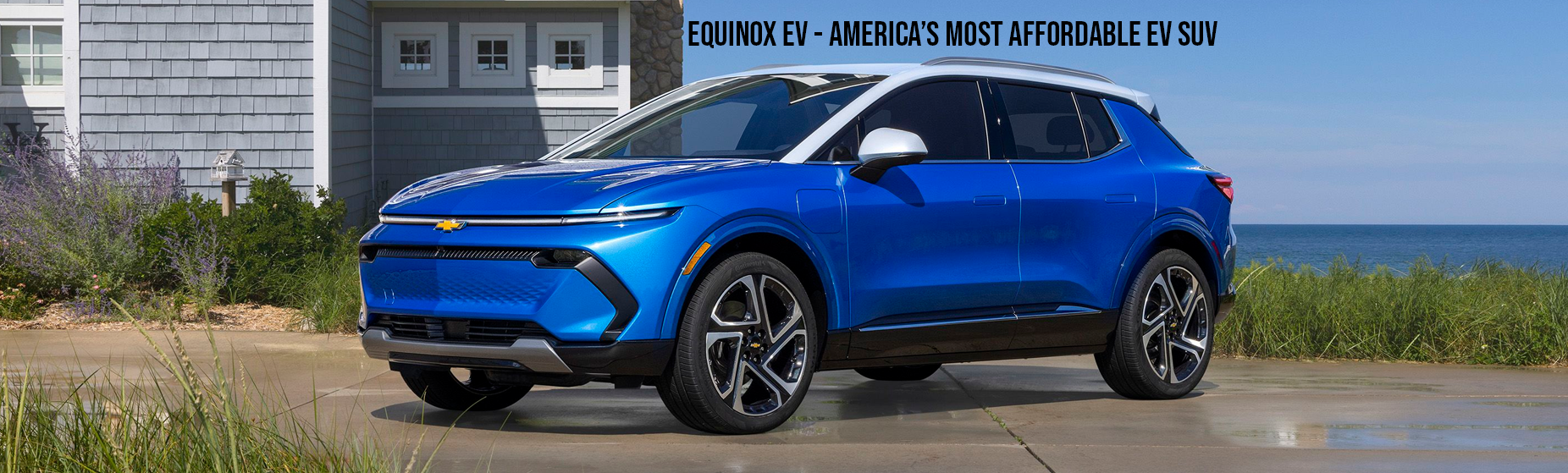
2024 Chevrolet Equinox EV - America's Most Affordable EV SUV

Chevy says the electric compact SUV will start at around $30,000 and have as much as 300 miles of range. It goes on sale in the fall of 2023. The 2024 Chevrolet Equinox EV Aims to be an Affordable All-Electric SUV Chevy says the entry-level Equinox EV will start at "around" $30,000 and have an estimated 250 miles of range. Other trim levels offer 280 to 300 miles of range and hands-free driver assistance. The Equinox EV goes on sale in fall 2023. Allocation for the Equinox EV has not been determined, but GM is no longer taking reservations for its new EVs. While we will promise a discount from MSRP, we won't know the amount until GM makes up its mind about how dealers will acquire these vehicles. Following the Silverado EV and Blazer EV, the 2024 Chevrolet Equinox EV continues filling GM's ranks with all-electric alternatives. For the Equinox EV, that means a compact SUV that Chevy will price starting at around $30,000. More expensive trim levels offer GM's Super Cruise hands-free driving, 300 miles of range, and a 19.2-kW onboard charger. more Battery Options The Equinox EV offers two battery sizes. Chevy hasn't said the capacity of either, but only the entry-level 1LT trim comes with the small battery, with an estimated range of 250 miles. Chevy estimates the larger battery, standard in higher trim levels, to offer 300 miles of range for front-drive Equinox EVs and 280 miles when equipped with all-wheel drive. Front-drive models have 210 horsepower and 242 pound-feet of torque, while all-wheel drive versions offer 290 horsepower and 346 pound-feet of torque. The Equinox EV is built on a similar platform as the Chevrolet Blazer EV and Cadillac Lyriq, though the Equinox EV is smaller than those vehicles. When you compare the EV to the gas Equinox, the EV has a longer wheelbase and overall length. In addition, its wheels are pushed close to the front and rear bumpers, creating shorter overhangs that generally make for generous interior space and more attractive exteriors. The sportier look of the Equinox EV with the lower roof line decreases the overall storage capacity. At 57 cubic feet with the rear seats folded, it has a little less space on paper than its gasoline counterpart. However, we look forward to testing the ICE and EV to see if the difference is meaningful. One highlight is that the cargo floor has two height settings, like the Honda CR-V. Unlike other electric vehicles, the Equinox EV does not have a storage area under the hood. Chevy reps said frunks are costly to implement and don't test well with its focus groups. Equinox Interior Inside, all Equinox EVs come with an 11.0-inch digital gauge cluster, and an impressive 17.7-inch center touchscreen is available on most trim levels. It's the same screen as you'll see in the Blazer EV and Silverado EV, and while the screens in the car we sat in weren't interactive, the graphics appeared crisp and easily readable. Interior storage options appear to be numerous and well thought out. For example, the center console has a generously sized opening under the cupholders and the tray where you set your phone, providing enough room for a large handbag. All manner of Chevy driving assistance will be available, from adaptive cruise control, heads-up display, rear-view camera, and so on. Most impressive, though, is GM's hands-free Super Cruise system, which is available on all trim levels except the base. On a personal note, I have a BOLT EUV with Super Cruise and love it. It managed to drive i459 and i59 hands free without any input on my part. Making the drive from Birmingham to Fort Payne as easy as pressing a button. Charging Speed As for charging, most Equinox EV models have an 11.5-kW Level 2 onboard charger, which Chevy estimates can add 34 miles of range per hour. The priciest RS trim level offers a 19.2-kW charger, increasing Chevy's estimate to 51 miles of range per hour. In addition, all Equinox EVs support 150-kW DC fast charging. How do I order a 2024 Equinox EV? Request Equinox EV Info Silverado EV Blazer EV Just because GM doesn’t have reservations doesn’t mean you can’t work with us on getting the new Equinox EV. At this point, we are not taking deposits and reserving people. It is just too far out, and we aren’t ready to manage it until we get a better idea of how many GM will send us. But you can tell us you are interested in an EV. We stayed away from market adjustments, and you won’t find any vehicles priced above MSRP on our website. We have a long history of hyper competitive pricing, and we will not have any market adjustments on our pricing for Equinox EV. At a minimum we will be selling this for $100 back of MSRP, but we will be determining pricing later once we have more information from GM.

Boltheader

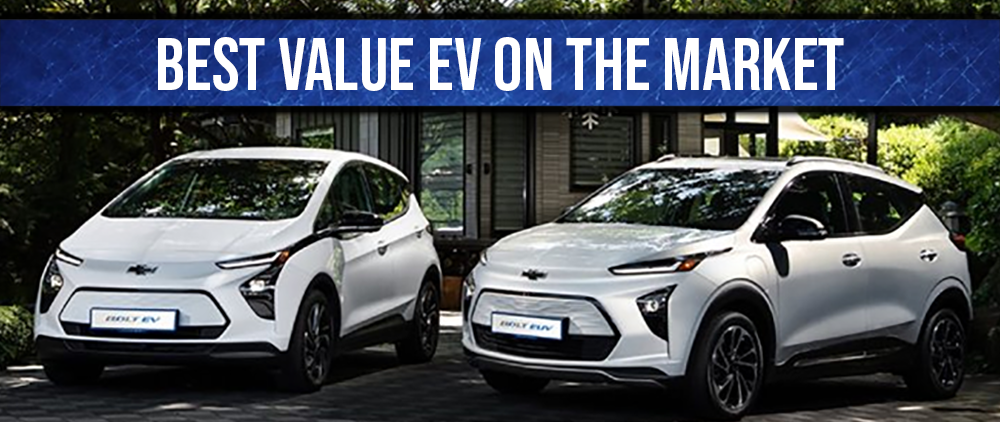
BOLT EV & EUV - Best Value EV On The Market

We have long been fans of the BOLT, but recent incentive changes have made it the best value EV on the market. Considering recent events, GM has cleaned up the battery “issue” and lowered the price by $6000, and introduced 2023 model year – as well as a tax rebate refresh opportunity – I thought it would be fun to take another look at the now sub-$30,000 Bolt EUV. more Back to the Bolt I’ve been driving one version or another of this car since way back in January of 2017. Chevy actually built the Bolt EV and delivered the first units at the end of 2016. We got our first one in early 2017 and fell in love with the small form factor “Micro Crossover.” Bolt EUV The Bolt EUV was unveiled in Feb 2021, and we took a first drive of it. The EUV is six inches longer, providing more room inside, including three additional inches of legroom in the back seat. That extra length/reduced height also makes the Bolt EUV look more like a crossover SUV than the Bolt EV, which more closely resembles a hatchback than a “Micro Crossover.” The drive train stays the same, so the bigger EUV is less than a second slower 0-60 and has a slightly reduced range. Chevy Bolt EV Range – 259 miles on a full charge Chevy Bolt EUV Range – 247 miles on a full charge Perhaps most importantly, GM saw fit to include an optional Super Cruise Autonomous driving on the EUV. It must be configured at purchase, and cameras/equipment are built-in, however, so it can’t be added later like Tesla’s Autopilot/FSD. Otherwise, the EUV is outstanding for an inexpensive EV, which are few and far between these days. The 0-60 in six seconds isn’t lightning fast, but it is respectable. The seats of both Bolts improved dramatically in 2022, and I wasn’t among the people who hated the early Bolt seats – the whole interior is just a lot nicer. Bolt EV and EUV – Fun to drive and practical Maybe the most crucial aspect of the Bolt experience is the ease and how much downright fun it is to own. You can rip around turns, gun it on green lights, and park easily. The hatchback means it is easy to load, and there’s a surprising amount of space in the back. Four adults fit well in the EUV or EV, as well as three kids in the back. 2023 Bolt EUV problems are many of the same from 2017 Unfortunately, the EUV still suffers from many issues I had with the Bolt back in 2017. Notably: DC fast charging speed: 54kW, allowing 100 miles in 30 minutes and 160 miles in an hour. In 2017, most DC fast charging was 50kW, so this wasn’t a huge problem. Today, it is no longer class-leading. Front-wheel drive, low resistance tires, wheels spin in rain/snow gravel quite easily. No AWD option. Putting even a 50hp electric motor on the rear wheels and charging a few thousand extra for a faster Bolt that would be able to handle snow would have opened up a much bigger market for the Bolt. Chevy didn’t do this. Gear shifting buttons: In 2017, the Bolt had a gear shifter that didn’t provide any tactile feedback but seemed like a normal shifter. In 2022, with the Bolt EUV, Chevy changed the shifter to buttons. Drive and Reverse are pull buttons, while Park and Neutral are push buttons (see below). The one nice thing is that for us one-pedal drivers, there’s a one-pedal drive button that keeps the driver's preference even after shutting down the car. Wireless CarPlay/Android Auto is a huge step up. One of the bigger improvements to the Bolt is the CarPlay/Android Auto experience. The 10.2-inch display is not only bigger, but it feels brighter, and things like maps pop. The touch display is also much more accurate. The biggest change, however, is that Carplay/Android Auto now works wirelessly, meaning you can just leave your phone in your pocket or drop it down the cleverly designed wireless charging hole and see the charging status on display. In my testing, Wireless CarPlay worked almost flawlessly on the Bolt EUV with a little lag when switching songs. The Bolt retains the ability to change songs and volume behind the steering wheel, though it has changed the buttons somewhat. Once you get used to this, the ergonomics of the Bolt are fantastic. Bolt EUV vs. EV There are some notable differences between the two cars, including the 6-inches of length and SuperCruise discussed already. Base Price: Bolt EV: $25,600 Bolt EUV: $27,200 Storage space is remarkably similar, given the extra six inches of length. But surprisingly, because it is taller, the shorter EV has more cargo space on a volumetric basis. Bolt EUV: 16.3 ft³, 56.9 ft³ with seat area Bolt EV: 16.6 ft³, 57 ft³ with seat area My Take I highly recommend the Chevy Bolt to anyone shopping for an EV in the $30,000 or under price bracket. There’s not much else out there to consider in the US market. The Nissan Leaf is similarly priced but has a lower range, Chadamo fast charging, and slower. The $35,000 Kia Niro/Hyundai Konas aren’t as zippy and are more expensive. The rest of your options are used Teslas (which don’t age particularly well) and other early EVs like Jaguar i-pace/Audi E-Trons or compliance cars. Even Mazda’s MX-30EV, with all of 100 miles of range, is more expensive at $33,500. The biggest question you might have is EV or EUV, and I might have a surprising answer for you. I recommend the EV over the EUV UNLESS you need that three inches of the extra rear room or Super Cruise, which I love (but also goes on a $25/month subscription after three years). The Bolt EV is incredibly roomy for its footprint. The EV is also $1600 less than the EUV base price. What’s more exciting is that if the new law makes its way through the US congress, it might make the Bolt a sub $20,000 car. Of course, a lot of devils will be in the details there, and it is likely that GM will bring prices back up if it passes. Still, you can’t go wrong with a Bolt EV purchase right now. Finding a New Bolt Shop BOLT EVs Shop BOLT EUVs One major consideration for many people today is finding a Bolt to purchase. The battery recall means many vehicles are held up at dealers awaiting battery replacement, and the supply of freshly built Bolts is limited. In the Southeastern USA, we are a top dealer in sales of Bolts, so we continue to get allocation that most dealers are not getting to build the 2023 model year. If you are interested in getting a sold order entered, please reach out to us. We can also help you with some of our Bolts that are awaiting battery replacements as those batteries are starting to arrive more quickly, and we have several not our website due to open recalls. We are NOT applying market adjustments, so you will not pay above MSRP to purchase a Bolt from us.

2024-blazer-ev-tech-02

Reserve Your Blazer EV - Lock in a Discount

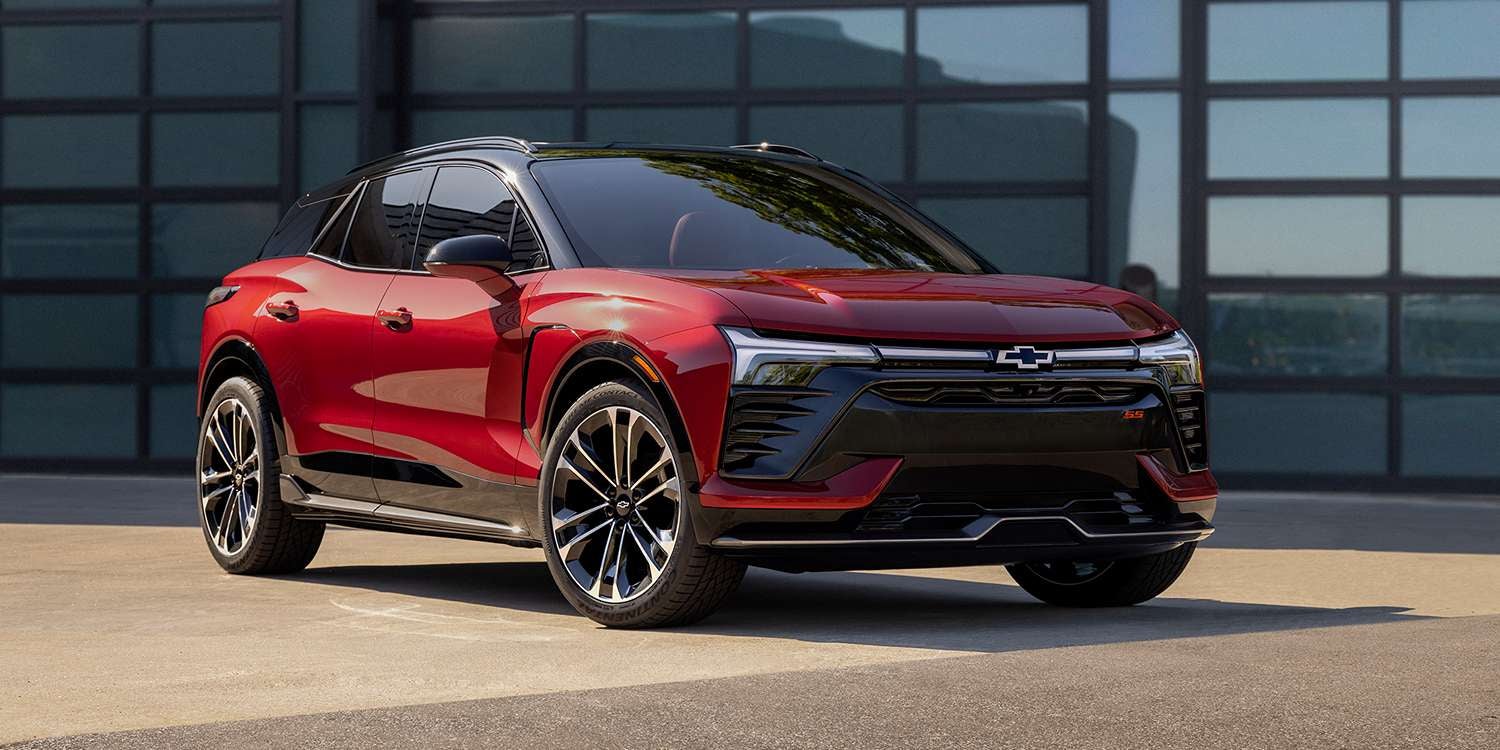
Chevrolet just opened up reservations for the Blazer EV. You can reserve yours by clicking the button below. We guarantee a discount if you reserve your Blazer EV through us. This is only available at Donohoo Chevrolet. Reserve Blazer EV Reserve Silverado EV more Blazer EV Trims The Blazer EV debuts with four trims—1LT, 2LT, RS, and SS—and a dizzying array of powertrain choices. The 1LT, 2LT, and RS are front-wheel-drive models as standard, with the 1LT able to go an estimated 247 miles on a charge. All-wheel drive is optional on the 2LT and RS, and the 2LT maxes out at 293 miles of range depending on battery size. The RS will also be available in a rear-wheel-drive configuration, and with a specific battery and drivetrain, the RS can travel up to 320 miles. The Blazer EV rides on General Motors' Ultium platform, and multiple battery configurations are available, but Chevy hasn't revealed how big the packs are. Chevy says that when plugged into a DC fast-charger, the Blazer EV can charge up to 190 kW, adding 78 miles of range in 10 minutes. At the top of the range, the Blazer SS becomes the first electric Chevy to bear the Super Sport badge, and it pumps out 557 horsepower and 648 pound-feet of torque. All-wheel drive is standard on the SS, and Chevy claims the crossover can hit 60 mph in under four seconds in the sportiest drive mode—which bears the name Wide Open Watts, or WOW. In addition, the SS will have front Brembo brakes, and it, like all Blazer EV s, features an independent front and rear suspension. The SS boasts an estimated 290-mile range. Each trim level gets a unique front fascia, with the LT displaying a blanked-off body-color grille while the RS adds a black grille piece, a full-width LED light bar, and sporty side skirts. The SS gets a more aggressive black mask with a column of strakes below the headlights and also gains a black roof. The LT rides on 19-inch wheels, the RS upgrades to 21-inch units, and the SS features 22-inch wheels. The LED light bar found on the RS and SS, which includes an illuminated Chevy logo, plays lighting sequences as the driver walks towards or away from the car and displays the charge level when the Blazer is plugged in. Blazer EV Interior The centerpiece in the interior is a 17.7-inch touchscreen paired with an 11-inch digital gauge cluster. The dashboard design is sleek and futuristic with turbine-like air vents, and the RS and SS add a flat-bottom steering wheel, ambient lighting, and many red accents. The RS and SS also get heated and ventilated front seats, while standard heated rear seats on the SS can also be optioned on the RS. The Blazer EV also comes packed with technology, with standard automated emergency braking, lane-keep assist, front pedestrian detection and braking, and optional reverse automated braking and Advanced Park Assist. GM's Super Cruise hands-free highway driving system is also available, and the MyChevy app will allow owners to map out routes to find charging stations. Trailering provisions are included when you add the Comfort & Convenience Package on the 2LT model with AWD and standard on the RS model. Additional vehicle features and options will be provided closer to the start of 2024 Blazer EV production. Chevy also says there will be a Police Pursuit Vehicle version of the Blazer EV. Using the SS as a base, the PPV will be fitted with the largest battery and offered in rear-wheel drive or dual-motor, all-wheel drive specifications. The PPV will also have the SS model's Brembo front brakes, and an interior redesigned to suit the needs of police officers. When Can You Expect It? The first Blazer EVs to arrive will be the 2LT and the RS, which go on sale next summer. The 2LT will start at $47,595 and the RS at $51,995, with the SS coming later in 2023 at an asking price of $65,995. Finally, the cheapest Blazer EV, the 1LT, and the PPV will show up in the first quarter of 2024, with the 1LT starting at $44,995.

BlazerEVReservations

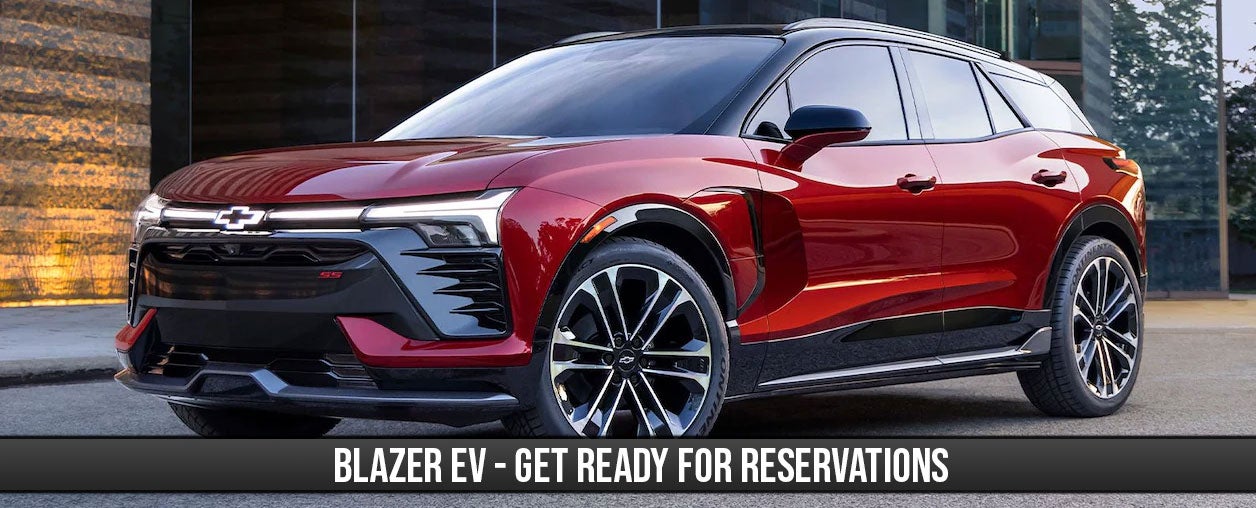
Get Ready For Reservations - Blazer EV

Let us start with a sales pitch. If you are going to reserve a Chevrolet Electric Vehicle, you need to reserve it through Donohoo Chevrolet. Why? Here is why: Guaranteed Discount from MSRP. Yes, this is an actual guarantee. We can't promise that GM won't change the MSRP before your vehicle is delivered, but we can promise to hold true to your discount. The Silverado EV is $2,500 off MSRP if you reserve with us. So it doesn't matter if you choose the base trim or the most expensive; you still get $2,500 off. The Blazer EV is discounted off MSRP. That is a guaranteed discount. The Equinox EV is discounted off MSRP. Yes, we promise a discount even before the official announcement. Donohoo Chevrolet has sold more EVs than 99% of Chevrolet dealers. We completed one of the first battery swaps in the BOLT and will continue to invest in the future of electric. You need to put your reservation in with someone who knows what they are doing with electric. End sales pitch. more Chevrolet has announced its all-electric Blazer electric vehicle will be revealed on July 18, 2022, at 8 pm PT/11 pm ET. Reservations will open on the same day. As we mentioned, using Donohoo Chevrolet as your facilitating dealership guarantees your discount. GM has been drip-dropping news on the Chevrolet Blazer EV since it was first teased at the GM CES presentation by CEO Mary Barra in January. At that point, it was a surprising sideline to the Silverado EV along with the $30,000 Equinox EV. Super Sport is a signature performance option package offered by Chevrolet since 1961. It implies that the new full image of the Blazer EV SS confirms that the first EV Blazer will be priced quite a bit higher than the $30,000 Equinox EV. Equinox EV Interior GM is finally starting to roll out some of the Ultium EVs CEO Mary Barra has been promising for years now. GMC started the year with limited numbers of Hummer EVs. GM's Spring Hill just started cranking out Cadillac Lyriq. Of course, the Silverado EV mentioned above and Equinox EV also are expected in the calendar year 2023. The company has plans to invest $7B in EVs and plans to have sales of 1 million EVs per year by 2025. Now that we can finally see the whole package, I have to say I like the look of the Blazer EV. We know from the previous drop that the indentation behind the front wheel will be where the charging port is. A lot is going on in the front of the car, but it isn't certain if it will support the camera equipment for SuperCruise. However, I suspect it will, at least in the SS trim. The big questions: AWD? Range? Charging speed? Interior quality? We'll find out on July 18. Reserve the Silverado EV

LvHvSS

Lithium vs Solid-State vs Hydrogen - What is the future of electric

While most consumers are driving and continue to drive gas vehicles, there are some companies, including GM, that would hurry the transition to electric cars. However, there are some issues with the adoption of electric vehicles. Currently, electric vehicles have a limited range of only three to four hundred miles, and they take much longer to charge than it would otherwise take to fill your car tank with gasoline. Once ranges can be extended and charging time significantly sped up, they will be considered more practical. The important question is, how far away are we from fixing these issues? In this blog, we'll be looking at different battery technologies currently in development, how close they are to being implemented, and the potential challenges each has that must be overcome. more Lithium batteries Unsurprisingly lithium-ion is the most common battery used in electric vehicles today. They are essentially scaled-up versions of the batteries found in consumer electronics. Instead of using a single unit like the one in your smartphone's battery packs, electric vehicles are made of thousands of lithium-ion cells. Those batteries give them a much greater capacity to provide enough energy to operate a large vehicle. Lithium batteries have a much higher energy density than traditional lead-acid or nickel-cadmium ones and are not only able to hold a larger charge but have a longer life span too. While you may be familiar with lithium as being the lightest of all metals, lithium-ion batteries don't actually contain any metal and instead contain lithium ions which can be manipulated to store or release the charge within the battery unit. There's a positive electrode normally made from a lithium compound, a negative electrode made from graphite, and a liquid electrolyte material that fills the rest. When an electrical charge is added to the battery, lithium ions move from the positive electrode to the negative one. Then when energy is released from the battery, they move in the opposite direction. Cons of Lithium Batteries: There are problems in using a battery of this design, the most dangerous of which is the risk of overheating, exploding, or even catching fire under certain circumstances. Electric vehicle manufacturers have had to invest heavily in developing features to reduce these dangers, making them safe for use on the roads. Features like including cooling mechanisms to regulate the battery's temperature help improve vehicle safety. Still, it will always be an ever-present risk because they contain liquid elements that undergo frequent temperature changes during regular operation. Another issue lithium batteries present is their usable life. In phones, for example, you only expect the battery to continue functioning for a year or two before its maximum charge cycles have been met. This only becomes a bigger problem when you make larger versions. Currently, most electric car manufacturers offer a guarantee that the battery will continue to work effectively for a minimum of eight years. Current estimates suggest that they should last between 10 and 20 years, but they will at some point need to be replaced. Of course, this has implications for the vehicle's resale value as it ages, but there are even bigger concerns for the waste this will produce. After trying to improve the situation for the environment by using an electric vehicle in the first place, the last thing you want to do is create batteries that will eventually end up in a landfill. Usability problems with lithium batteries are that they will always have a relatively limited range, and there's very little that can be done to increase the speed at which they can be charged. So while they're certainly suited to short-distance journeys, those who drive more than a few hundred miles at a time will be faced with extended charge times of up to an hour in some cases. That's a hard sell when traditional combustion engine vehicles only take a few minutes to refuel. There are, however, two other promising types of battery technologies that will eventually pass lithium-ion for vehicles of the future. Hydrogen Fuel Cells You may have seen that hydrogen-powered cars are already available, like the Toyota Mirai. While they aren't yet as prevalent as lithium power, they offer several advantages that mean they will likely become a viable alternative once enough infrastructure is available to operate them. From a user's perspective, they work similarly to gas-powered cars, which is one of their greatest advantages. The vehicle's tank is filled with liquid hydrogen, which is fed into a fuel cell with oxygen. The reaction that takes place within the cell converts the chemical energy contained within the hydrogen to mechanical energy to operate the car. The only waste product created in the process is water vapor. With the ability to refill a tank in just a matter of minutes and with a far greater range than lithium vehicles can offer in a single charge, there are several obvious benefits of using a hydrogen-powered car. Cons of Hydrogen Power There are, however, several disadvantages too. Not everyone is convinced this is a feasible technology for mass adoption, and various improvements will need to be made before large-scale use is possible. The first thing that needs to be addressed is simply the cost of building hydrogen fuel cells in the first place. For example, installing the required infrastructure, gas stations will need to offer pumps that dispense hydrogen—fuel, which will require a massive investment upfront. A particular concern is whether hydrogen-fueled cars have the energy credentials that consumers expect from an electric vehicle. They use, for example, an estimated three times as much energy to operate as lithium cars do for each mile driven. The energy that must come from somewhere and liquid hydrogen production is somewhat controversial. It's an element that doesn't exist in its liquid form in nature, so it must be manufactured, and more than 95 percent of the hydrogen created is done from natural gas. This means that fuel production releases just as many greenhouse gases and potentially even more than a traditional combustion engine. The technology is essentially moving the problem from one place to another. There are other ways to produce hydrogen, such as the electrolysis of water but this is currently so cost-intensive that it's nowhere near being realistic. For everyday use as fuel for a vehicle, demand for hydrogen would have to significantly increase to make it worthwhile. There's an element of a gamble involved in this technology. It is uncertain if zero immission hydrogen will become a thing or if companies like Toyota are willing to heavily invest in such a gamble. Solid-State Batteries Probably the most exciting development for electric vehicles is the solid-state battery. While not ready for mass adoption, solid-state will be a complete game-changer when it is. Samsung is currently leading the way with numerous companies jumping on board. By reinventing how a battery is made, engineers believe the range of an electric car can be doubled compared to its lithium alternative. Solid-state batteries have actually been in use for a long time in small devices such as pacemakers and RFID tags, but currently, it's impossible to recharge them. What's new is that they've designed a way that allows the movement of the ions within the battery to be reversed, which is needed to add extra charge to them. They've done this by changing the electrolyte used inside the battery. In lithium-ion batteries, the electrolyte is a liquid, while in a solid-state battery, the electrolyte is solid. This means the battery is the same power at about half the size. So manufacturers will have the option to double range or half battery size to reduce weight. For the most efficient vehicles, this could mean a range of up to 600 miles or more on a single charge, making most trips viable without having to schedule an hour to recharge midway. As a further advantage, researchers at Samsung also claim these batteries will have a longer usage life than Lithium-ion. They expect them to be able to be recharged more than 5,000 times before needing to be replaced. This gives each vehicle an operating life of more than a million miles before significant maintenance is required. They take up less space, but they're also far more stable and don't have a significant fire concern. Without the extra cooling surrounding them, solid-state batteries weigh significantly less. Solid-state batteries are safer because they don't contain any liquid parts, so even if they're punctured in a crash, there isn't the same risk of being further injured from their contents. Larger vehicle manufacturers have said that they see solid-state batteries as the future of electric vehicle technology. Toyota just announced a pretty major update on their solid-state battery technology. Solid-state isn't quite ready to be incorporated into designs on a mass scale, however, and probably won't be for several years. Researchers are still trying to find the perfect atomic and chemical compositions for the solid electrolyte that can deliver enough power for the reliable operation of a vehicle. In addition, the batteries that are on the market are still far too expensive to produce at a mass scale for commercial use. The most likely outcome is that solid-state batteries will first enter the luxury end of the market on vehicles that cost upwards of a hundred thousand dollars. However, once they've been proven to be effective and desirable, costs will eventually fall and become attainable within the price ranges of most consumers. With such attractive battery technologies on the horizon, the future of the automotive industry is undoubtedly electric. Have you gotten an electric vehicle yet, and if not, what's stopping you from making the transition? Let us know on the Facebook post.


SopranoAd

Super Bowl Sopranos Ad Steals the Show

Did you watch "The Sopranos" when it was on HBO a few years back? Well, Chevrolet partnered with the creator and director of the show David Chase to create a 60 second Superbowl commercial. The ad, called "New Generation," aired during the first quarter of the game without any previews from GM beforehand. The commercial includes many of the same spots as the original introduction. However, instead of Tony Soprano driving a 1999 Chevrolet Suburban, it's the mob boss's daughter Meadow, played by Jamie Lynn Siegler, and she drives a 2024 Chevrolet Silverado EV. You can watch a side-by-side comparison below. more The spot features the original theme song of the show, "woke Up This Morning" by Alabama 3. It ends with the reunion of Meadow and her brother A.J., played by Robert Iler. They hug, and the voiceover says, "The first-ever, all-electric Chevy Silverado. A whole new truck for a whole new generation." A lot has changed since the show aired from 1999-to 2007. To put how fast Electric Vehicles have grown, the first Tesla wasn't produced until 2008. It is crazy to think how fast technology has evolved in just a little over a decade. While I personally would love to see a show about mobsters driving around in electric vehicles it may be something relegated to Super Bowl commercials and our imaginations for the time being. Chevrolet hasn't had a Super Bowl commercial since 2015. This ad was one of two that were aired this year. The second was a broader brand-focused ad that featured Dr. Evil, played by Mike Myers. I find it a little strange that the same man/organization that invested heavily into Starbucks would also be dabbling in electric vehicles, but what do I know? Here is that spot if you want to watch it.

Contact Us

Fill out this form below and we'll contact you shortly
*Required Fields