Blog / BOLT EUV

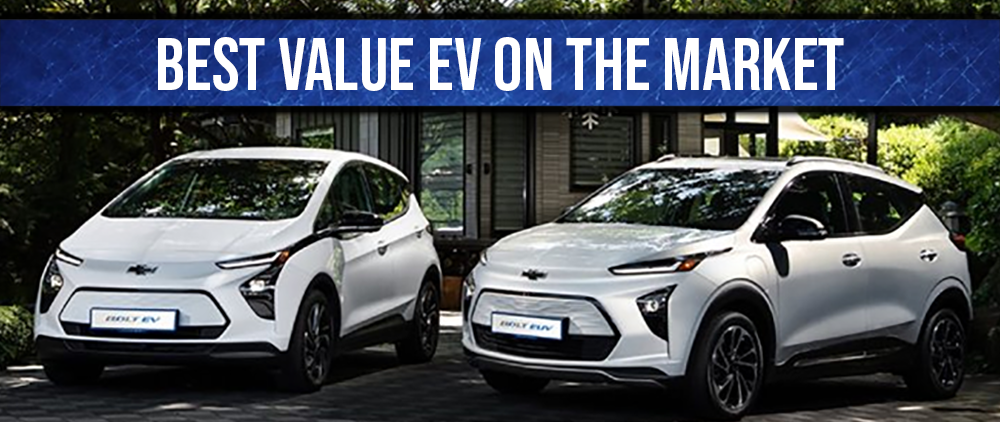
BOLT EV & EUV - Best Value EV On The Market

Boltheader

We have long been fans of the BOLT, but recent incentive changes have made it the best value EV on the market. Considering recent events, GM has cleaned up the battery “issue” and lowered the price by $6000, and introduced 2023 model year – as well as a tax rebate refresh opportunity – I thought it would be fun to take another look at the now sub-$30,000 Bolt EUV.

Back to the Bolt

I’ve been driving one version or another of this car since way back in January of 2017. Chevy actually built the Bolt EV and delivered the first units at the end of 2016. We got our first one in early 2017 and fell in love with the small form factor “Micro Crossover.”

Bolt EUV

The Bolt EUV was unveiled in Feb 2021, and we took a first drive of it. The EUV is six inches longer, providing more room inside, including three additional inches of legroom in the back seat. That extra length/reduced height also makes the Bolt EUV look more like a crossover SUV than the Bolt EV, which more closely resembles a hatchback than a “Micro Crossover.” The drive train stays the same, so the bigger EUV is less than a second slower 0-60 and has a slightly reduced range.

  • Chevy Bolt EV Range – 259 miles on a full charge
  • Chevy Bolt EUV Range – 247 miles on a full charge

Perhaps most importantly, GM saw fit to include an optional Super Cruise Autonomous driving on the EUV. It must be configured at purchase, and cameras/equipment are built-in, however, so it can’t be added later like Tesla’s Autopilot/FSD.

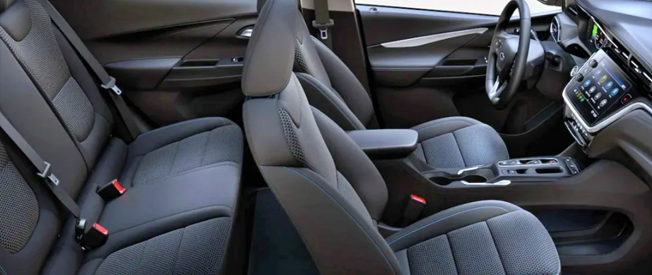
Otherwise, the EUV is outstanding for an inexpensive EV, which are few and far between these days. The 0-60 in six seconds isn’t lightning fast, but it is respectable. The seats of both Bolts improved dramatically in 2022, and I wasn’t among the people who hated the early Bolt seats – the whole interior is just a lot nicer.

Bolt EV and EUV – Fun to drive and practical

Maybe the most crucial aspect of the Bolt experience is the ease and how much downright fun it is to own. You can rip around turns, gun it on green lights, and park easily. The hatchback means it is easy to load, and there’s a surprising amount of space in the back. Four adults fit well in the EUV or EV, as well as three kids in the back.

2023 Bolt EUV problems are many of the same from 2017

Unfortunately, the EUV still suffers from many issues I had with the Bolt back in 2017. Notably:

  • DC fast charging speed: 54kW, allowing 100 miles in 30 minutes and 160 miles in an hour. In 2017, most DC fast charging was 50kW, so this wasn’t a huge problem. Today, it is no longer class-leading.
  • Front-wheel drive, low resistance tires, wheels spin in rain/snow gravel quite easily.
  • No AWD option. Putting even a 50hp electric motor on the rear wheels and charging a few thousand extra for a faster Bolt that would be able to handle snow would have opened up a much bigger market for the Bolt. Chevy didn’t do this.
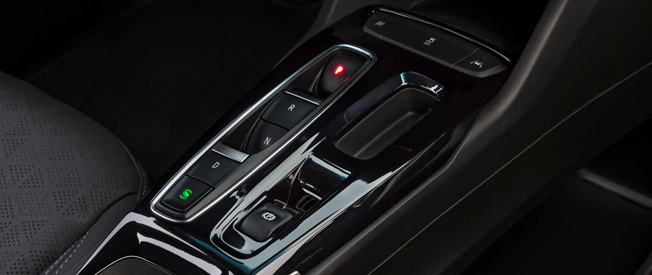
  • Gear shifting buttons: In 2017, the Bolt had a gear shifter that didn’t provide any tactile feedback but seemed like a normal shifter. In 2022, with the Bolt EUV, Chevy changed the shifter to buttons. Drive and Reverse are pull buttons, while Park and Neutral are push buttons (see below). The one nice thing is that for us one-pedal drivers, there’s a one-pedal drive button that keeps the driver's preference even after shutting down the car.

Wireless CarPlay/Android Auto is a huge step up.

One of the bigger improvements to the Bolt is the CarPlay/Android Auto experience. The 10.2-inch display is not only bigger, but it feels brighter, and things like maps pop. The touch display is also much more accurate.

The biggest change, however, is that Carplay/Android Auto now works wirelessly, meaning you can just leave your phone in your pocket or drop it down the cleverly designed wireless charging hole and see the charging status on display. In my testing, Wireless CarPlay worked almost flawlessly on the Bolt EUV with a little lag when switching songs.

The Bolt retains the ability to change songs and volume behind the steering wheel, though it has changed the buttons somewhat. Once you get used to this, the ergonomics of the Bolt are fantastic.

Bolt EUV vs. EV

There are some notable differences between the two cars, including the 6-inches of length and SuperCruise discussed already.

Base Price:

  • Bolt EV: $25,600
  • Bolt EUV: $27,200

Storage space is remarkably similar, given the extra six inches of length. But surprisingly, because it is taller, the shorter EV has more cargo space on a volumetric basis.

  • Bolt EUV: 16.3 ft³, 56.9 ft³ with seat area
  • Bolt EV: 16.6 ft³, 57 ft³ with seat area

My Take

I highly recommend the Chevy Bolt to anyone shopping for an EV in the $30,000 or under price bracket. There’s not much else out there to consider in the US market. The Nissan Leaf is similarly priced but has a lower range, Chadamo fast charging, and slower. The $35,000 Kia Niro/Hyundai Konas aren’t as zippy and are more expensive. The rest of your options are used Teslas (which don’t age particularly well) and other early EVs like Jaguar i-pace/Audi E-Trons or compliance cars. Even Mazda’s MX-30EV, with all of 100 miles of range, is more expensive at $33,500.

The biggest question you might have is EV or EUV, and I might have a surprising answer for you. I recommend the EV over the EUV UNLESS you need that three inches of the extra rear room or Super Cruise, which I love (but also goes on a $25/month subscription after three years). The Bolt EV is incredibly roomy for its footprint.

The EV is also $1600 less than the EUV base price. What’s more exciting is that if the new law makes its way through the US congress, it might make the Bolt a sub $20,000 car. Of course, a lot of devils will be in the details there, and it is likely that GM will bring prices back up if it passes.

Still, you can’t go wrong with a Bolt EV purchase right now.

Finding a New Bolt

One major consideration for many people today is finding a Bolt to purchase. The battery recall means many vehicles are held up at dealers awaiting battery replacement, and the supply of freshly built Bolts is limited. In the Southeastern USA, we are a top dealer in sales of Bolts, so we continue to get allocation that most dealers are not getting to build the 2023 model year. If you are interested in getting a sold order entered, please reach out to us. We can also help you with some of our Bolts that are awaiting battery replacements as those batteries are starting to arrive more quickly, and we have several not our website due to open recalls. We are NOT applying market adjustments, so you will not pay above MSRP to purchase a Bolt from us.

Posted in:

Related Posts

Lithium EV Problem

What is the Biggest Issue to 100% Adoption of Electric Vehicles?

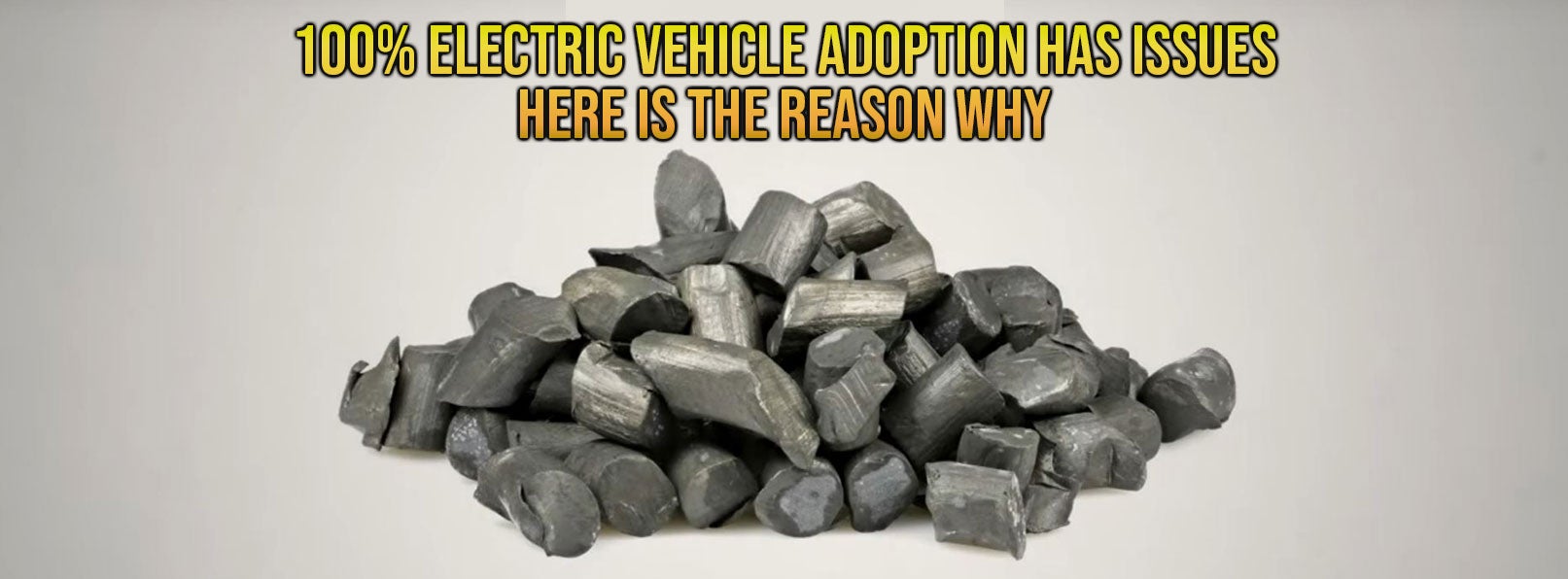
This is lithium. Pretty soon, we are going to need a lot of it. Lithium is a useful metal. It spends its entire existence trying to get rid of its one outer electron, but, crucially, this reaction can be both controlled and reversed. That means, properly configured, the metal can discharge energy when needed, take in more energy, and then discharge that energy. Essentially, it can act as a battery. It's only been a few decades since lithium-ion batteries reached commercial feasibility, but, in that time, they have become the power source of choice for portable electronics thanks to their perfect blend of safety and lightness. However, the latest major tech boom, the latest infatuation of Silicon Valley and Wall Street alike, is centered around the most extensive consumer electronics product to date: electric vehicles. Electric vehicles need a whole lot of lithium. more Source: https://www.youtube.com/watch?v=9dnN82DsQ2k&t The UK, for example, has committed to banning internal combustion car sales by 2030. To replace its 31.5 million vehicles, about 236,000 metric tons of lithium carbonate are needed. To produce 236,000 metric tons of lithium carbonate, every lithium mine in the world would have to devote its output to this one use for nine months. So there are a lot more countries, a lot more lithium applications, and a whole lot more growth in the forecast. While the industry and its issues may be complex, how battery-grade lithium is produced is not. Four countries dominate the sector —Argentina, Chile, Australia, and China combined account for 92% of the globe's production. The metal is extracted from the ground at massive sites like the Greenbushes mine in Western Australia, the world's largest hard-rock lithium mine. The site was selected due to the abundance of spodumene in the area, a mineral containing large concentrations of lithium. Once the raw material is extracted from the ground, it's transported two and a half hours north to the Kwinana Lithium Plant near Perth—a facility majority owned and operated by a Chinese company, Tianqi Lithium, which is responsible for almost half of the world's production of the metal. Once refined, lithium hydroxide and other compounds are sold to battery manufacturers, which in about three-quarters of cases means one of three companies—LG Chem, CATL, or Panasonic. The problem, however, is the world's solution. In addition to the UK, Iceland, Belgium, the Netherlands, Germany, Denmark, Norway, Sweden, Israel, Singapore, and South Korea have each committed to banning the sale of internal combustion passenger vehicles within the next decade. Adding up their annual passenger vehicle sales numbers from 2019 means the absolute base-case demand for EVs a decade from now will be 9.5 million per year. To reach that, EV production would have to quintuple, but even the most conservative forecasters don't dare tread anywhere close to a number as low as 9.5 million in 2032. Finally, the market is waking up to what this means for lithium demand. Across 2021, Seaborne lithium prices rose from around $8,000 per metric ton to over $30,000—a 400% rise in a mere twelve months—and lithium is hardly the only crucial metal for lithium-ion battery production—it's just the one in the name. Cobalt and nickel are also critical to most commercially-available versions of these batteries, and the situation is hardly different with them. Cobalt prices doubled across 2021, while nickel rose to its highest price in a decade. So, the world needs a lot more metals, but right now, it's hard to believe the world's going to get them. Is The US Trying to Improve Lithium Production? What Hurdles Are There? The biggest hurdle the industry faces is best exemplified here: Thacker Pass, Nevada. Source: https://www.youtube.com/watch?v=9dnN82DsQ2k&t Thacker Pass is located in one of the most sparsely populated areas of the country. It's a half hour's drive to the nearest store, an hour to the nearest supermarket, and three to the nearest Starbucks. The few roads in the area are lucky to see a few cars an hour, traveling to and from the various remote farms, ranches, and communities dotting northern Nevada. That could soon change, though. 250 miles to the south is the Silver Peak Lithium Mine. This is the nation's only currently operating major lithium mine, despite the US being one of the largest EV markets and home to the world's largest EV manufacturer. China, also a major EV market home to major EV manufacturers, has made significant headway in building up its domestic lithium production capacity. The country's companies also have a significant presence at the world's other major lithium production sites. Getting beat at lithium production has concerned those in charge in the US. So naturally, sights are set on Thacker Pass—home to the US' largest lithium deposit. This site could singlehandedly propel the US into the ranks of major lithium producers, but getting a mine up and running there has proved… difficult. How significant lithium deposits are distributed across the world is rather cruel. Overwhelmingly, they're located in arid regions with little water availability, like Nevada. Thacker Pass receives less than 10 inches of rain a year. However, the extraction and processing of lithium require enormous quantities of water. It's expected that operations at the proposed Thacker Pass lithium mine would require 3,224 gallons of water per minute—roughly equivalent to the contents of a backyard, above-ground pool. That water would be used to pump into the ground as part of the extraction process, during refinement, and to conduct necessary dust control at the site. To get the water, the mine would have to pump it out of the ground using wells, but every acre-foot of water in the area is strictly allocated, given the degree of scarcity. So the mine has to buy up water rights from others to gain the legal right to use it. However, what that means is that there's a direct trade-off between one use and another, and in this case, the other use is predominantly ranching and farming—two key tenants to the local economy. In addition, there's a chance the project could do far more to further the inaccessibility of water in northern Nevada. The US Bureau of Land Management's Environmental Impact Study for the project found that it presented the distinct possibility of leaking unacceptable levels of arsenic into the area's groundwater table, which could take the entire region's water supply offline for hundreds of years. In a place where the availability of water undergirds almost all economic activity, that has people seriously concerned. The issues only compound on top of that. As Thacker Pass is, of course, a mountain pass, it acts as a wildlife corridor between the Double-H and Montana mountains—two biodiversity hotspots. Therefore, the environmental impact study found the project likely to destroy or deteriorate thousands of acres of habitat used by the pronghorn antelope, sage grouse, golden eagle, and other unique species. For interrelated reasons, the project also has several local indigenous tribes concerned—the most vocal is the Fort McDermitt Paiute and Shoshone Tribe. They say that during the era of American soldiers rounding up and shipping indigenous people off to reservations, two of the tribe's families hid out in the shelter Thacker Pass provided—so they directly attribute the continued existence of their tribe to the area. In addition, they consider the pass a sacred site, partly because of a historic massacre they say occurred there. This assertion, however, was directly challenged in a court case related to the mine project, and the judge rejected the claim citing a lack of evidence. To add to their opposition, the tribe put forward evidence linking the development of similar resource-extraction projects, which are predominately staffed by men, to increases in the rape and murder of indigenous women in nearby areas. Even just looking at these few headline issues, it becomes clear that the Thacker Pass lithium mine project is mired in a nearly insurmountable web of controversy and conflict, and it's hardly alone in that status. Much of the evidence opponents to the Thacker Pass mine have put forward is based on real-world experiences in the lithium triangle—the nexus between Chile, Argentina, and Bolivia that hosts some of the world's most productive lithium production facilities. In a similar situation—a remote, arid landscape punctuated by small communities home to a historically oppressed indigenous population—the lithium triangle has seen an economic boom. Still, it's come at the cost of environmental and cultural devastation. Just as the issues are not confined to one geography, they're not even limited to lithium alone. According to World Bank figures, some 70% of the world's cobalt, a crucial component to current battery tech, comes from the Democratic Republic of the Congo—the 8th poorest country in the world. While a majority of the cobalt mining is conducted by large mining companies with often shaky safety and human rights records, a concerningly large minority is accomplished through what's referred to as "artisanal" mining—a term defining the illegal, informal practice of individuals mining cobalt by themselves and selling it on to shady middlemen. The complete lack of safety standards or regulations in the sector means child labor and deadly mine collapses are rampant. In addition, for those that aren't directly injured or killed on the job, long-term exposure to cobalt mines has been linked to significant health effects later in life and fatal congenital disabilities for children in the region. Altogether, there's almost no such thing as ethical cobalt. There's also almost no such thing as green lithium. There's little appetite anywhere to increase lithium mining in the places where it's accessible, and little progress has been made in the DRC to make cobalt mining less socially disastrous. As demand for EVs and their batteries increases, getting more cobalt and lithium will be incredibly difficult. However, getting more cobalt and lithium that's more ethical and green, or even as ethical and green, will be next to impossible. But to decarbonize driving, solutions must be found. How Can GM Plan An Electric Future With So Many Limitations? Solid-State Battery Production Rather than finding more raw materials, one option is to need less of them. But, of course, the way to do that is by making batteries better. The most promising short-term innovation that could fulfill that mission is solid-state batteries. Whereas traditional EV batteries have a liquidy, viscous lithium-based electrolyte, solid-state batteries use a solid metal composition as their ion transport mechanism. This switch has many benefits, including a higher safety profile that reduces the risk of fire and, therefore, reduces the need for expensive safety features. Solid-state batteries can also be made without cobalt or nickel, eliminating two problematic and costly necessities in current battery tech. Most significant, however, is solid-state batteries' higher energy density and faster charging times. Traditional lithium-ion compositions used in EV battery packs store about 114 watt-hours of energy per pound. That means one pound of battery could move a Chevrolet BOLT EV, for example, 0.4 miles. Meanwhile, it's expected that solid-state batteries will be able to store between 175 and 225 watt-hours per pound— essentially doubling battery density. That means GM could halve the weight of their half-ton battery pack and not only keep range the same but increase it as the car would no longer need to carry the rest of the weight of the battery pack. On top of all those benefits, experts believe that, at scale, the production costs of solid-state batteries could be even less than the cheapest current lithium-ion batteries. However, the issue is getting to that scale. Battery production needs to occur in absolutely massive quantities to reach cost-competitiveness—an assertion backed up by the industry's current effective triopoly. The process of working down this cost curve is long as there are few applications where battery weight matters as much as with EVs, and EVs won't switch to solid-state batteries until their cost is competitive. Still, their cost will only become competitive when the industry reaches a production capacity that only EVs can provide. So, the industry has to wait for some level of scale to occur through niche solid-state battery applications in medical devices, race cars, and fighter jets; then wait for consumer electronics to realize the weight savings or battery life benefits the innovation could provide; then wait for the highest-end EVs to incorporate the technology to offer super-long ranges as a luxury; before solid-state batteries can finally reach a cost that would allow them to permeate into what will by then be the large segment of everyday EVs. Most estimates place that enticing end-goal more than a decade away. Even if the solid-state battery transition reaches fruition earlier, the world will still need a whole lot more lithium. Is There Any Ethically Sourced Lithium? Far from the potential environmental disaster at Thacker Pass is an existing ecological disaster—the Salton Sea. Source: https://www.youtube.com/watch?v=9dnN82DsQ2k&t A century ago, Colorado River floodwaters breached through an irrigation canal and accumulated, over the years, in the Imperial Valley's geographic low-point 236 feet below sea level. That massive puddle still exists today, but some of the water has slowly evaporated through time, leaving an ever saltier, dirtier accumulation of water. However, thousands more feet below are several underground volcanoes that superheat water to hundreds of degrees. If one brings that water to the surface, the pressure change leads to it transforming into steam and steam, of course, is what most power plants use to drive turbines. Traditional power plants use coal or natural gas to heat water into steam, but this steam is created by the earth—meaning it's carbon-free. That's why Berkshire Hathaway Energy has built ten geothermal energy plants in the area, but, crucially, this superheated water is filled with something else: lithium. Therefore, these geothermal plants are planning to add an extra step to extract lithium from the briny steam they use. However, there are undoubtedly significant technological hurdles that stand between now and a future of commercially-competitive lithium production at the Salton Sea, primarily as the metal only represents a tiny portion of the slurry of materials found in the water, but the lithium is there. As the largest existing energy company working around the Salton Sea, Berkshire Hathaway Energy is leading the charge thanks in part to a sizable federal grant and expects to have its demonstration facility up and running later in 2022. Some competitors have already started developing their lithium-extraction plays around the Salton Sea, meaning America's first lithium boom-town might already be a foregone conclusion. These are the solutions needed as the world transitions to electric mobility. Unfortunately, due to their reliance on batteries, electric vehicles are just dirtier than internal combustion vehicles to produce. Lithium can be recycled, but the process needs to advance to make it truly viable. That being said, the vast majority of emissions from cars, including from EVs themselves, come not from the production of vehicles but from driving them. If Lithium Mining Is So Bad Why Change to Electric Vehicles at All? The science on the issue is sound—electric vehicles, from production, to use, to scrapping, are responsible for about 75% less emissions than their internal combustion counterparts, even on current, fossil-fuel-based electric grids. Anyone who argues the opposite is either misinformed or attempting to disinform, and that gap will only widen as grids continue to decarbonize. However, there can be better alternatives to better alternatives. In the coming lithium gold rush, technologies will have to adapt to supply shortages and hopefully lead to a greener future. One that sees ethically and humanely sourced lithium and battery components. An important note to remember when discussing mining is natural gas is also mined and has numerous questionable methods to acquire it. The most critical aspect of natural gas is that experts expect us to run out of gas in the next 50 years at our current consumption rate. We have seen some arguments about the current grid not supporting charging electric vehicles. While there seems little doubt that EVs will increase the nation's grid load, "The transition … will be slow," contends Pat Romano, CEO of ChargePoint, one of the nation's largest public charging companies. The primary reason for his optimism is his expectation that 80% of EV owners now charge their vehicles at night, mostly from home, taking advantage of a general surplus of off-peak generating capacity. ChargePoint' s business model is based on the expectation that will remain the case as we advance. But, even in off-hours, the already creaky grid is likely to become still more stressed, requiring plenty of upgrades, on top of new generating capacity — whether fossil-fueled or renewable, experts agree. In the US, updating a power grid that hasn't seen significant change since the early 50s probably won't be a bad thing. TLDR: Lithium, Cobalt, and Nickle have significant sourcing and ethical problems that will need to be addressed to meet future battery demands. The US is looking at improving our production. Still, environmental concerns at Thacker Pass, Nevada, and technology concerns at the Salton Sea may delay the US from becoming a major player in lithium production. Future solutions will make electric vehicles genuinely viable such as solid-state batteries, but economies of scale will need to be achieved before they become commercially viable. We need to replace gas-powered vehicles to limit emissions and decrease our dependence on finite resources. Still, significant changes must be made to our infrastructure before that vision can become a reality.


All Electric GM Future

GM Plans An All-Electric Future

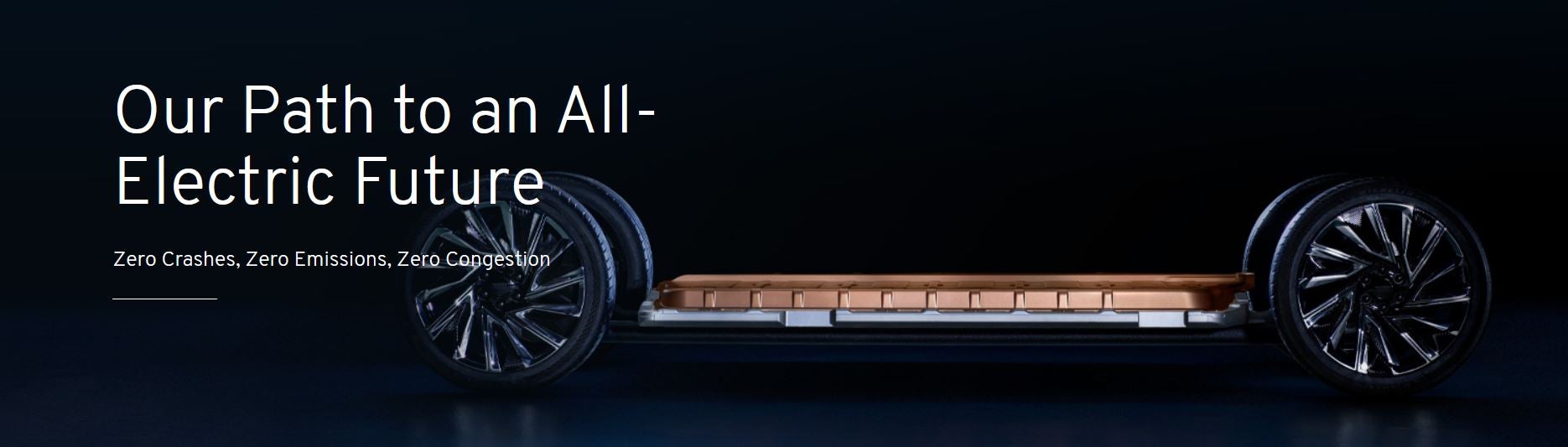
In January 2021, General Motors (GM) made a stunning announcement. It aspires to eliminate tailpipe emissions from new light-duty vehicles by 2035, meaning that GM intends to stop selling gas-burning cars. Over the past several years, GM executives have made announcements touting the carmaker's commitment to winning an all-electric future. But, of course, rivals such as Tesla, the world's most valuable automaker somehow, sell only electric vehicles. So GM saying they are going to win electric comes with stiff competition. more GM plans to introduce 30 EVs by 2025. It is part of GM's strategy to attack an emerging market and seize the first-mover advantage. Their goal is to become competitive and introduce technologies that other companies will attempt to emulate. GM executives are quick to say that no tailpipe emissions by 2035 are a goal and not a guarantee. But even with the walk back, GM's plan has skeptics. Concerns linger among auto industry insiders. They don't know if consumers are ready to fully adopt electric vehicles, at least not where they are today. Vehicle ranges are improving, but charging an EV still takes a lot longer than filling a gas tank. Moreover, many areas don't have sufficient charging stations, especially when comparing them to their gas counterparts. GM is not the only one that has made a significant commitment to electric vehicles. But some other automakers are spreading their bets out among electric hybrid and even more efficient internal combustion engines. So GM's commitment to going all-electric by comparison is a considerable risk. GM is expected to spend upwards of $35 billion on its electric investment by 2025. They have diverted numerous skilled engineers and designers off of gas vehicles and invested significant resources to develop the best electric cars possible. The automaker is planning crossovers, cars, SUVs, and trucks. That means the fantastic lineup you have today will be essentially unchanged except for the power source. This includes all four of the US brands. The only pure electric vehicles that GM sells are the BOLT EV and BOLT EUV. However, that will change soon after January 5th. The Silverado EV will be announced, and reservations will begin taking place. You can see our post about what we expect the reservation process to be like here. The GMC HUMMER deliveries will start sometime next year. The Silverado EV will be produced in the same American plant as the HUMMER, with deliveries sometime in the following year. Ultium batteries will be built in the Ohio and Tennessee plants making the electric future GM envisions a very American one. Underpinning most of these new electric vehicles will be the aforementioned Ultium batteries—a newly designed battery in partnership with LG CHEM. GM has said it aims to reduce battery cost well under $100 per kilowatt-hour by 2025, compared to the current $150/kW today. They also expect the new batteries to last for a million miles or more, with driving ranges of 500-600 miles between charges. These Ultium batteries will hopefully eliminate the two biggest concerns of EV adoption: range and battery life. GM's plans don't stop with just retail customer vehicles. They plan on producing a massive line of commercial vehicles. Therefore, it will be imperative for GM to establish itself in the commercial market and have a viable passenger and cargo van. GM is trying to accomplish this with their Brightdrop venture, including vehicle equipment and service for commercial electric fleets. FedEx is the project's first customer. General Motors released the EV 1 from 1996 to 1999, making it the first automaker to sell a mass-produced electric vehicle. However, despite customer satisfaction, the company could not make the business case for EVs and scrapped the project and crushed most EV 1s. Nevertheless, the market is more ready than it was in the 90s for EVs, and a report from Merril Lynch forecasts that by 2035, electric vehicles will make up about 31% of total light-vehicle sales worldwide. Boston Consulting Group estimates that pure electric cars will comprise 45% of light vehicle sales worldwide by 2035. Those of you who are good at math might have noticed something important. If these forecasts are for at best 45% adoption, why is GM making 100% electric by that year a goal? In 2020 GM had a market share of 8.7% of the world's automotive market. That market share is down since 2008, but GM has also drastically cut back on lower profit sales such as rental fleets. GM has mostly exited Europe and India and is currently heavily dependent on the US and Chinese markets. Now compare that market share to the overall electric vehicle market share of 2%. An increase from 2% to 45% would represent a paradigm shift in the auto industry. Maybe GM thinks it will gain more considerable worldwide appeal by leading the way in electric. China and Europe are already demanding more EVs, and the US has shown a growing taste for them. The question will be, can the infrastructure change fast enough to accommodate the growth GM expects? There are several barriers a consumer has to consider with an EV today. The first is the upfront cost. Electric vehicles are, on average, more expensive than their gas counterpart. However, the Ultium batteries should narrow that gap considerably. The next is the availability of charging stations. As of August 2021, there were 5,325 DC fast-charging stations in the US, compared with roughly 150,000 gas stations. Of course, you can charge your vehicle in your garage or the office, but many Americans may not have access to those conveniences. While the electrify America initiative is making strides towards decreasing that gap, it may be a few years still until that divide is no longer a factor. With all the doubts and concerns about electric vehicles, it does help to keep in mind the positives. First, an electric car is a simple and reliable piece of machinery at its core. The engineering masterpieces of an internal combustion engine, drivetrain, transmission, and all of the belts, hoses, and pipes that make an ICE vehicle run are vastly simplified in an electric vehicle. An ICE vehicle has over 2,000 moving parts that have to move in sync to ensure the car runs efficiently. An electric vehicle, by comparison, only has around 20 moving parts. You can make an electric motorcycle with nothing more than a battery, electric inverter, control unit, motor, and driveshaft. An electric car is only a little more involved than that. You will never have to worry about an oil change with an electric vehicle. Another reason to buy an electric vehicle is that it is simply fun to drive. I am sure you have seen Elon Musk talk about the insane 0-60 times Teslas can achieve. He doesn't tell you that that is a characteristic of all electric vehicles. It is insane to think that the GMC HUMMER EV has a faster 0-60 time than the ZL1 Camaro. If you have never driven an EV, I encourage you to give one a test drive. One foot driving with regenerative deceleration is a game-changer and hard to put into words. You will feel more in control behind the wheel than almost any ICE vehicle. We expect the Silverado EV to have similar performance numbers to the HUMMER. We don't know if GM will achieve its goal of no tailpipe emissions, but we are excited to see how the auto industry changes as electric vehicles become more mainstream. Like GM, we are taking a bet on EVs and are taking steps to become one of the top EV dealers in the nation. That means hiring knowledgeable electric technicians and investing in vehicle supply and accessories, so you will get precisely what you are looking for. We are working on getting the BOLT EV, and BOLT EUV recalls completed, but you can shop our current inventory by clicking here. If you want to save a little money and start your electric vehicle journey shop our used BOLTs by clicking here.

Bolt Recall In Progress

Do You Know How to Check Your Bolt's Battery Recall?

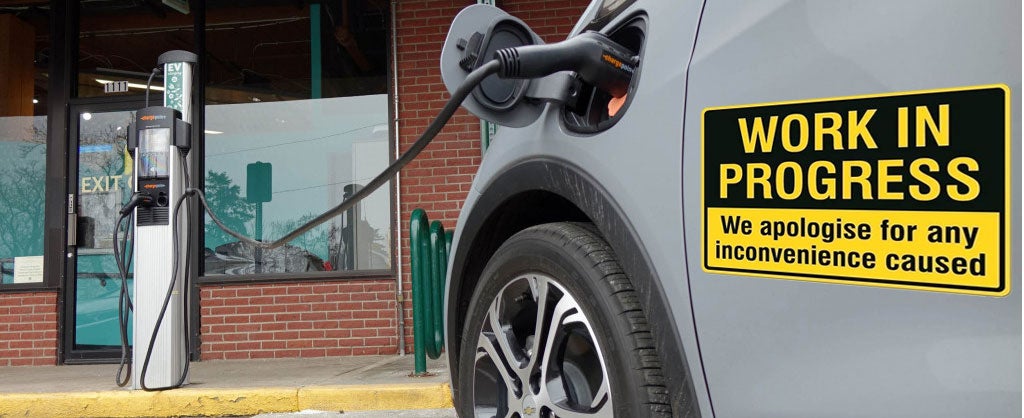
Have you received your Battery Recall Notification? First of all, if you are one of our hundreds of Bolt customers that purchased new from us, thank you for taking the leap with us on GM’s EV products and learning how much fun these Bolts are to drive. Your blog writer personally owns a Bolt, and my wife an incredibly cool new model Tahoe, but I’d rather drive the Bolt. And that isn’t a knock on the new Tahoe, which is excellent. I love my Bolt that much. So all of you that have been patient with GM, I’d guess you are showing a lot of patience because you love your Bolt as well. more Great news for 2017-2019 owners out there! The battery recall is opening gradually as the battery supply increases, and once you are eligible for the battery replacement to be completed, your recall bulletin will change from 212343880 to 212343881. Once that occurs, your Bolt should be eligible for us to order your battery replacement. For all of you with 2017s and 2018s, your range will be 259 miles instead of 238 miles with the new battery. And all of you will get an 8 year / 100,000 miles battery warranty (whichever comes first). When you go to https://experience.gm.com/ownercenter/recalls or check for recalls on your vehicle with your Chevrolet app, you will see the following if you are eligible. How does the process work? Step 1 is to reach out to us to confirm your battery can be replaced. Then step 2 is to arrange for your Bolt to arrive, and we can provide you with a loaner to drive. Once we receive your Bolt, we will order you a battery pack, which will take just 2-3 days to arrive. You may ask why you have to have the vehicle to us before we order the battery. It is because GM is very particular about tracking the batteries. With so many Bolts to replace compared to available batteries right now, it is only fair to send batteries to shops where the battery can for sure be installed right away. Think of it like a restaurant that won’t seat you until everyone in the party has arrived. Once we get the battery, so long as we don’t have too many customers getting battery replacements at once, the job is usually done within a day or two. We also need the vehicle before the battery is ordered because the car cannot be charged within 24 hours of the battery replacement, so getting it here before the battery gets here makes sure we can meet that. Why come to us? We have already done 11 battery replacements as of 11/8/21, with more scheduled. Our dealership is one of the top-selling dealers of EVs in the Southeast, and our service department was the first to perform a replacement in the Southeast region. You can see cool photos of the battery and its replacement here - https://www.donohoochevrolet.com/blogs/3987/bolt-recall-update-batteries-incoming. We understand Bolt customers, and we are invested in the EV future. We also have multiple technicians trained to complete the battery replacement. In addition, we have loaner vehicles, which is not common these days amongst dealers. Some of you may be in Huntsville, Chattanooga, Atlanta, or Birmingham metro areas. If you are, you can likely get to us on a full charge. If you are not, you can go to a dealer within a full charge’s drive of you if you can find a dealer that can complete Bolt recalls (not all are). This link from Chevrolet will enable you to search for EV dealers near you. https://www.chevrolet.com/electric/dealer-locator. We’d love for you to come to us, but we realize that isn’t always possible. If you want to use us, give us a call, and let’s see how we can help arrange it. Complete the contact form and add your VIN into the comments to submit something to us. https://www.donohoochevrolet.com/contactus.aspx What if I am not eligible? Keep being patient. GM is releasing more VINs each week. If you would like us to help monitor, complete the contact form and add your VIN into the comments to submit something to us https://www.donohoochevrolet.com/contactus.aspx, and we will give you another set of eyes. If you install the Chevrolet app on your phone, that can notify you on the recall status. You saw above what the recall will look like in the GM Recall Center. Below is what you see when your vehicle is not eligible yet.